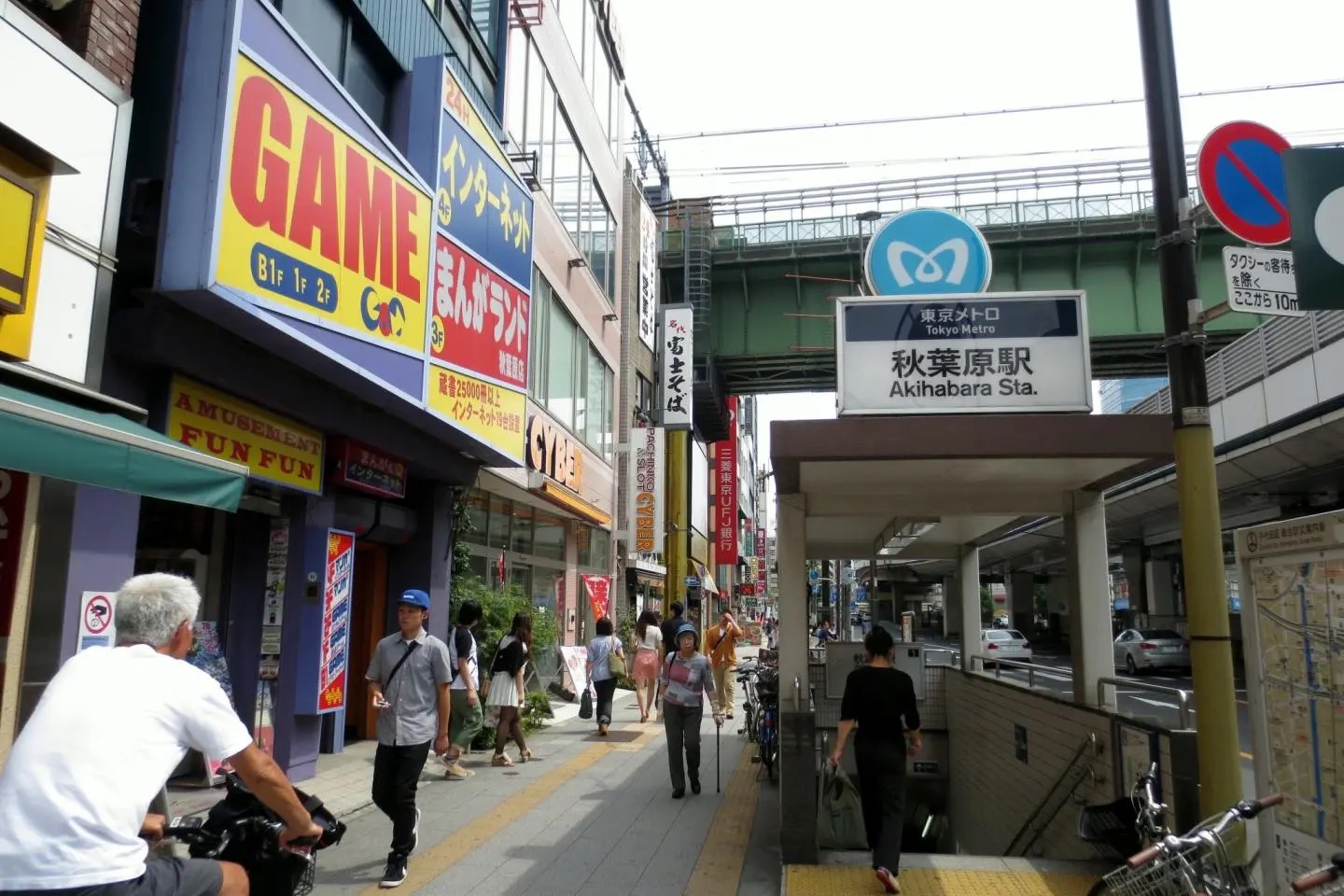
Three Akihabara Stations, one Electric Town — pick the right one
Akihabara is one of the easiest districts in Tokyo to reach — it sits on the JR Yamanote Line loop, the Tokyo Metro Hibiya Line, and the Tsukuba Express, and it is a short ride from Tokyo Station, Shinjuku, Shibuya, Ueno, and Asakusa. The confusion for first-time visitors is not getting to Akihabara; it is choosing the right exit once you arrive. There are three separate Akihabara Stations, each operated by a different railway, and each has its own exits. Pick the wrong one and you add a confusing five-minute walk through an underpass with luggage.
This guide breaks down each station, which exit to use for Electric Town (the anime and electronics core), sample fares and travel times from major Tokyo hubs, and the single walking route that reliably gets you to the main street, Chuo-dori.
JR Akihabara Station — the default choice
JR Akihabara Station is the station most visitors should target. It serves three JR lines: the Yamanote Line (Tokyo's green loop line), the Keihin-Tohoku Line (north-south through Tokyo, Ueno, and Yokohama), and the Chuo-Sobu Line (east-west across central Tokyo). If you are using a Japan Rail Pass, this is the station you want.
The Yamanote and Keihin-Tohoku lines share a platform on the second floor. The Chuo-Sobu Line platform is on the third floor. Regardless of which you arrive on, the goal is the same: head down to the Electric Town Gate (Denkigai-guchi) on the first floor. Follow the yellow signs marked "Electric Town Gate" — they are large, frequent, and bilingual. Once through the gate, take the Electric Town North Exit, which drops you into an open plaza facing the main shopping streets.
From the North Exit, walk straight toward the former Sega Building (now GiGO) at the end of the plaza — the road behind it is Chuo-dori, Akihabara's main street. This is the simplest route and the one most signage points you toward.
Sample JR fares and times:
- Tokyo Station → Akihabara: ~4 minutes, ¥170
- Shinjuku Station → Akihabara: ~20 minutes, ¥170 (Chuo-Sobu Line direct)
- Shibuya Station → Akihabara: ~30 minutes, ¥210 (Yamanote Line)
- Ueno Station → Akihabara: ~5 minutes, ¥170 (Yamanote or Keihin-Tohoku)
Tokyo Metro Akihabara Station (Hibiya Line) — the quieter option
The Tokyo Metro Hibiya Line station is the less crowded of the two subway options and the best choice if you are coming from Roppongi, Ginza, or Tsukiji. It is also the closest station to Yodobashi Akiba, the large electronics-and-shopping complex, which is useful if that is your first stop.
After exiting the ticket gates, look for Exit 3. From Exit 3 you will see Yodobashi Akiba across the way — head toward its entrance, then turn left into the pedestrian passage that runs underneath Showa-dori. This passage connects east-west and leads directly to the JR Central Gate area and onward to Electric Town. It is a covered, flat walk, which makes it the best route if you are carrying shopping or luggage.
Sample Hibiya Line fares and times:
- Roppongi → Akihabara: ~22 minutes, ¥220
- Ginza → Akihabara: ~12 minutes, ¥180
- Tsukiji → Akihabara: ~9 minutes, ¥180
Tsukuba Express Akihabara Station — from Asakusa and Tsukuba
The Tsukuba Express (TX) is a modern line that connects Akihabara with Tsukuba in Ibaraki Prefecture, passing through northern Chiba. It is the fastest route from Asakusa to Akihabara — roughly 4 minutes and ¥210 — and is often overlooked by visitors who assume Asakusa and Akihabara require a transfer.
From the TX station, take Exit A1 to the above-ground level. You will see shops and an escalator; on the far right is the same east-west pedestrian passage described in the Hibiya Line section. From that point the route to Electric Town is identical to the Hibiya Line route.
Which line should you use?
If you are coming from the Yamanote Line loop (Shinjuku, Shibuya, Ueno, Tokyo, Ikebukuro), use JR Akihabara Station and the Electric Town Gate. If you are coming from the southwest (Roppongi, Ginza, Tsukiji), use the Hibiya Line. If you are coming from Asakusa, the Tsukuba Express is faster than you would expect. The JR Pass covers JR lines only; the Tokyo Subway Ticket covers the Hibiya Line but not JR.
The Electric Town Gate — your anchor
Whichever station you arrive at, the goal is the same: get to the Electric Town Gate area on the west side of the JR station. From there, the entire anime, gaming, and electronics district is within a two- to three-block walk. Yodobashi Akiba is to the south, Radio Kaikan is to the west, and Chuo-dori (the main pedestrian paradise street on Sundays) runs straight through the center.
One final note: on Sundays, the central section of Chuo-dori becomes a pedestrian paradise (hokoten) from 13:00 to 18:00, with vehicle traffic closed. If your visit lands on a Sunday afternoon, the Electric Town North Exit opens directly into this car-free zone, which is the most pleasant time to arrive.